


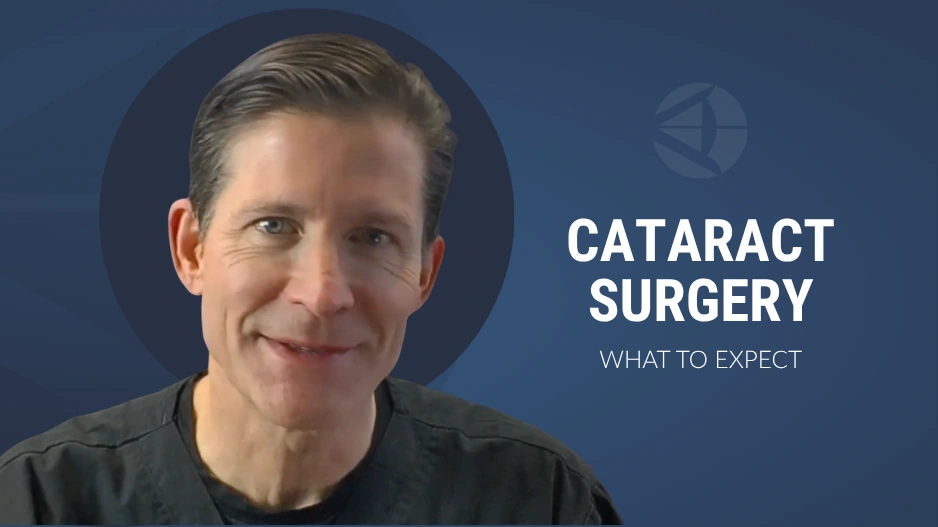
By Dr. Joseph King | K2 Vision – Dr. King is an ophthalmologist at K2 Vision, serving patients across our seven convenient locations in Seattle, Portland, Tacoma, Olympia, Tri-Cities, Everett, Vancouver, and the Scottsdale/Phoenix area.
Blurry vision, glare around headlights, colors that seem faded. These are easy symptoms to dismiss or chalk up to needing a new glasses prescription. But they are often early signs of cataracts, one of the most common and most treatable causes of vision changes as we age.
The good news is that we understand cataracts better than ever, and treatment today is safe, effective, and tailored to your lifestyle. Watch our overview below, then read on for everything you need to know.
What Is a Cataract?
A cataract occurs when the natural lens inside your eye becomes cloudy over time. When we are young, that lens is crystal clear, focusing light so we can see sharp, detailed images. As we get older, proteins in the lens begin to change and clump together. That clouding scatters light instead of focusing it.
A useful way to picture it: imagine looking through a frosted window instead of a clean pair of glasses. That is essentially what a cataract does to your vision.
Cataracts are incredibly common. Most people will develop them at some point. They are a normal part of aging, not a disease you caught, and nothing to be embarrassed about.
What Causes Cataracts?
Age is the biggest factor. The proteins in the lens simply change over decades of use. But other contributors can accelerate the process:
- Prolonged sun exposure
- Smoking
- Diabetes
- Long-term steroid use
- Previous eye injuries or surgeries
- Family history
Some patients develop cataracts earlier than expected, particularly those with a strong family history or one of the contributing factors above.
What Are the Symptoms?
Cataracts develop slowly, and the earliest signs can be subtle. Common symptoms include:
- Blurry or cloudy vision
- Glare or halos around lights, especially while driving at night
- Difficulty distinguishing contrast
- Colors that appear faded or washed out
- Frequent changes in glasses prescription
One of the most common things patients tell us is that their glasses just do not seem to work anymore. When the lens itself is the problem, no prescription update is going to fix it.
When Is It Time to Consider Surgery?
Cataracts do not always require immediate treatment. In the early stages, stronger lighting and an updated prescription may be enough to get by. The real question is whether cataracts are affecting your daily life.
If you are struggling to read, having trouble driving at night, or finding that everyday tasks feel harder than they used to, it may be time to consider surgery. There is no benefit to waiting for a cataract to worsen before acting. That is an old myth. Our team makes decisions based on how your vision is functioning, not on how a cataract looks on paper.
What Is Cataract Surgery Actually Like?
Cataract surgery is one of the most successful and most commonly performed procedures in all of medicine. We remove the cloudy lens and replace it with a clear artificial lens called an intraocular lens, or IOL.
The surgery is typically painless, takes just 10 to 15 minutes, and is performed under a local topical anesthetic, sometimes with light sedation. Most patients notice sharper vision within days, and many notice improvement almost immediately.
There are several lens options available. Some correct for distance, others for near vision, and some offer a blend of both. Our team works through the right choice with you during your consultation, based on your lifestyle and visual goals. No surprises.
It is completely normal to feel nervous going into surgery. But cataract surgery today is gentle, precise, and highly predictable. Patients regularly tell us afterward that colors look brighter, night driving is easier, and they feel like they have gotten their independence back.
With 350K+ procedures performed and 100+ years of combined experience, our surgeons have helped hundreds of thousands of patients see clearly again. We bring that same expertise to every cataract consultation.
Book a Free Cataract Consultation
If you are noticing cloudy vision, glare, or difficulty with everyday tasks, a comprehensive eye exam is the first step toward finding out whether cataracts are behind your symptoms.
With seven convenient locations serving Seattle, Portland, Tacoma, Olympia, Tri-Cities, Everett, Vancouver, and the Scottsdale/Phoenix area, the team at K2 Vision are ready to help. Book a Free Consult today, in person or virtually by phone or Zoom.